
The Power of Storytelling for Making an Impact: Leveraging Its Strength
This article explores how leveraging the power of storytelling can help make a difference in humanity by inspiring creativity and driving productivity through emotionally charged content that resonates deeply with target audiences. Learn more about its strength here!
Storytelling is an ancient tradition that has been used to captivate audiences and evoke emotion since the beginning of time. Stories have been used to educate, inspire, and bring people together through shared experiences. Today, storytelling is still an important tool for making an impact, inspiring creativity and driving productivity. This article will explore how leveraging the power of storytelling can help to make a difference in humanity.
Why Storytelling Matters
Storytelling has been at the heart of our culture for centuries. It has shaped our beliefs, shaped our values and shaped our understanding of the world. In today’s digital age, storytelling is even more important as it can be used to connect with others in ways that no other medium can. By creating stories that touch people on a personal level, businesses and organizations can reach out to their target audiences in an effective and meaningful way.
Stories provide rich context and meaning, which helps to create an emotional connection with your audience. When it comes to engaging with customers and developing deep relationships with them, storytelling can be incredibly powerful. By understanding the power of storytelling and incorporating it into your communication strategies, you can foster a sense of connection with your audience and make a lasting impact.
The Power Of Storytelling For Creativity
When it comes to creativity, storytelling has been proven to be incredibly valuable. Stories are often told as a form of creative expression, allowing individuals to express their feelings and emotions through creative means. Storytelling can also help to break down mental barriers, inspiring new ideas and providing insight into different perspectives.
Stories can also be used as a collaborative tool for teams working together on projects. By connecting different stories together, teams can brainstorm more effectively while also encouraging personal expression and engagement with the project at hand. Furthermore, storytelling helps groups find common ground, allowing them to develop deeper connections that foster creativity and productivity in the workplace.
Harnessing The Power Of Storytelling To Drive Productivity
Storytelling can also help to drive productivity in the workplace by creating a stronger sense of purpose for employees or team members. Individuals are more likely to succeed when they have a clear goal or purpose in mind. By creating engaging stories that capture employees' attention and motivate them towards their goals, managers can help employees stay focused on their tasks by providing them with meaningful inspiration throughout their daily lives.
Moreover, leveraging the power of storytelling can help employees understand the “why” behind certain tasks or projects. This helps them become better problem solvers as they focus on creating creative solutions that are meaningful to both them and the company as a whole. By understanding why something is important or necessary, employees are more likely to put forth extra effort in order to achieve desired results.
Crafting Stories That Speak To Humanity
Throughout history, stories have been used as tools for conveying values and beliefs across cultures. Well-crafted stories can serve as powerful reminders that we are all part of a much larger narrative than we could ever imagine. By exploring stories from different cultures, we gain insight into how different people think differently while also appreciating our similarities as human beings.
Humans also have an inherent need to connect with others on an emotional level; this is why stories play such an important role when it comes to achieving meaningful relationships with others. Stories provide us with opportunities for reflection and connection by allowing us to explore our own feelings while also empathizing with those around us. This type of connection helps us create stronger communities and foster a greater sense of unity among individuals from different backgrounds and cultures who share a commonality in humanity’s story-driven narrative journey through life’s ups and downs .
Unleashing The Power Of Storytelling On Social Media
The power of storytelling has evolved beyond traditional mediums such as books or movies; now more than ever before, stories are being shared on social media platforms such as TikTok, Instagram or YouTube at an unprecedented rate. By utilizing social media platforms as tools for sharing stories, businesses can reach out to their target audience in powerful ways that no other medium could provide before the digital age.
Social media adds another layer of engagement to storytelling by allowing people from all walks of life to connect with each other in new ways while simultaneously connecting people back to the core values behind any specific story being shared through these platforms. Furthermore, businesses can create unique branding opportunities through social media by encouraging users to share their own stories about how the company or product has made a difference in their lives; this helps companies stand out from their competition while also creating emotionally charged content that resonates deeply with their target audiences .
Taking Storytelling To The Next Level With Technology
With the rise of modern technology over the past few decades , storytelling has evolved into a highly sophisticated form of communication . Technologies such as artificial intelligence (AI) , augmented reality (AR) , virtual reality (VR) , motion capture technology , 3D animation , interactive video , drone cinematography , 360 ° video , interactive audio , immersive documentary filmmaking , hypertext narrative , interactive installations and much more are helping bring stories alive in captivating ways never seen before .
By taking advantage of these new technologies , businesses can create unique experiences for their customers while also helping capture their attention through multimedia content . Furthermore , these technologies allow brands to create virtual worlds that evoke emotion while immersing users into entirely new realities never imagined possible before . In today’s increasingly digitized world where attention spans are becoming shorter by the day , leveraging this new wave of technology will allow companies and organizations alike stay ahead of the competition while delivering compelling content that resonates deeply with their target audiences .
Conclusion: Leveraging The Strength Of Storytelling
Storytelling is one of the oldest forms of communication known to man . It is an invaluable resource for businesses seeking new ways engage effectively with their target audiences . By understanding its power for making an impact , inspiring creativity , driving productivity , connecting humanity across cultures and leveraging modern technologies , forward-thinking businesses can use stories strategically turn these resources into powerful tools for conveying meaningful content that resonates deeply with customers.

Maximising Performance with Smart Rest Strategies
Maximise performance with simple, smart rest strategies. Learn how to boost productivity by self-care and getting the right amount of sleep.
Are you looking for ways to maximize your performance? Smart rest strategies are key for improving your productivity and getting the most out of your day. Self-care and getting enough sleep are essential for improving your performance and helping you reach your goals.
When it comes to improving performance, rest seems like the last thing you want to think about. However, rest can be an effective way to increase productivity. Studies have shown that when people get the right amount of sleep and practice self care, they are able to work better and reach their goals faster.
In this blog post, we will discuss why rest is important for maximizing performance, provide tips on how to get better sleep, and explain how self care can improve productivity. By following these strategies, you will be able to maximize your performance and get more accomplished.
Why Rest is Important for Maximum Performance
At first glance, resting doesn’t seem like it would have anything to do with an individual’s performance. However, research has shown that getting enough sleep is directly related to improving performance. When individuals get the right amount of sleep on a regular basis, they are able to perform better in different areas of their life. Sleep is important because it helps individuals restore their energy levels, remain alert throughout the day, and focus on tasks more effectively.
Additionally, research has also found that individuals who practice self-care are also more productive than those who don’t. Self-care can include taking breaks during the day, eating healthy meals, exercising regularly, or meditating. All of these activities can help improve an individual’s overall wellbeing which in turn helps them become more productive.
Tips for Getting Better Sleep
Getting better sleep is essential for maximizing performance. The following tips can help you get more restful nights of sleep on a regular basis:
Stick to a consistent sleeping schedule - Try going to bed at the same time each night and waking up at the same time every morning. This will help establish a routine which can help ensure that you get a full night's rest each night.
Limit caffeine intake - Caffeine can interfere with your ability to fall asleep at night so try not to consume too much throughout the day or late into the night.
Limit electronic devices - Avoid using electronic devices like phones or tablets in the hours before bedtime as they can interfere with sleep cycles by exposing your brain to stimulating blue light which makes sleeping more difficult.
Avoid stressful activities at night - Stressful activities such as working on tasks close to bedtime can make it harder for you to relax before going to sleep. Try to avoid engaging in stress-inducing activities close to bedtime if possible in order to relax before going to bed for the night.
How Self Care Can Improve Productivity
When it comes to maximizing performance and improving productivity, self care cannot be overlooked. Self care is important because it helps individuals stay energized throughout their day so they can perform better at their job or other activities that they engage in during their day. By taking regular breaks during the day and engaging in activities that help relieve stress such as meditation or mindfulness techniques, individuals are able to focus better on tasks which in turn helps them produce better results faster. Additionally, eating nutritious meals that provide energy throughout the day can also help individuals stay energized which is important for optimal performance in any activity or profession.
Overall, rest is an important factor when it comes to maximizing performance and improving productivity. Practicing good sleep hygiene and engaging in self care activities can help individuals get more out of their days by increasing their energy levels and focus which ultimately leads to better results faster. By following these strategies on a regular basis, you will be able to maximize your performance and reach your goals faster than ever before!

How to build a brand Twitter following from zero
I’ve found that most tools and processes start with analysing your existing audience, but that doesn’t work if you’re an early-days startup. So, this is my process for building a following from nothing. Zip. Zero. Zilch.
I’ve found that most tools and processes start with analysing your existing audience, but that doesn’t work if you’re an early-days startup. So, this is my process for building a following from nothing. Zip. Zero. Zilch.
Some things to keep in mind:
This process takes time. It will probably take several months. Stick with it, though, because it’s worth it.
A lot of this process involves trusting your gut. Save the science for later, this is about experimentation and getting to know the humans you hope will buy your product.
Forget your competitors, for now. This is about you and your potential customer.
Make sure your profile looks top-notch
First things first! Get your profile looking super impressive. That includes your description, website, logo, header image, the works.
Remember that people don’t know your brand yet, so it’s a good idea to include two or three words about your product in your name. That’s the first thing they’ll see when you interact with them.
Start with your problem statements
Make a list of the top 5 problems you solve for your customer. If they were looking for a solution, what keywords would they use to find it?
Get to know your audience
Now, think about who your potential customer already engages with. Brands, influencers, etc. Pick 20 accounts they likely already follow.
Go to those accounts and read their recent tweets. You're looking for ones that got lots of likes and comments. Pull out the keywords, topics, and ideas behind them. Add those to your keywords list.
Expand and validate
Take your list of keywords and topics, and use a keyword analysis tool to expand it. You're looking for additional keywords that seem like ones your audience would search or engage with.
Now it’s time to validate your list. Search Twitter for each of these keywords individually, on the "Latest" tab. Your goal is to weed out any that don't get frequent engagement, or that don't bring up tweets which seem relevant to your audience.
Remember, this is about what your audience is interested in, and the pain points they have, not your product.
Take your final list and create one big long search by using Twitter search operators:
Keyword OR Keyword OR (Keyword AND Keyword) OR "Key Word"
Bookmark or save this search. It's your new favourite place on the internet.
Create daily engagement
Check this search at least twice per day. Look for tweets you can engage with naturally, and slip your product into conversation.
Them: "I can't wait for the weekend I'm going to play some music with friends."
You: “Nice! Our product makes playing music with friends even better. Check it out at [download link]. Have a great time this weekend!"
✅ DO include something that makes it clear you read their tweet, and this isn't an automated message.
🔴 DON'T write like a door-to-door salesman. "Why not try it today!" is not how people talk in real life. You want to get them to like you, as a person.
🔴 DON'T feel like you need to talk about your product in every tweet. Just engaging is enough to build a brand.
🔴 DON'T feel like you need to reply to every tweet. A silent like is okay, if that’s what feels right.
Always follow the person you engaged with. You can clean up your follows later.
💡TIP: Mix and match responses from your brand, and yourself as a person, if you are comfortable with it. Tweets from individuals get much higher engagement because people trust them more. If you reply as yourself, tag your brand account and follow from both.
The trick to easy content creation
When you reply to a tweet, you can "invert" it to create a tweet of your own. Using the example above, some tweets you could write:
"Who's playing music with friends this weekend? 👋 Make the gig it even cooler with [product] [download link]"
"[product] makes playing music with friends better. [download link]"
✅ DO play with questions, statements, and polls.
✅ DO use images. Tweets with them get 2.3x higher engagement.
✅ DO highlight your audience’s pain points and your product’s value propositions.
🔴 DON'T post all versions right away. It's best to keep a list of tweets and mix them up over time.
🔴 DON'T feel like every tweet has to be an award-winner. It’s ok to experiment.
Learn and adapt
Every two weeks, repeat this entire process to develop a strategy and tone of voice. Consider factors like:
Which of your tweets and replies got the most engagement?
Which accounts followed you back?
What insight does your Twitter analytics provide?
What are your competitors tweeting?
Which tone of voice gets the most engagement?
💡 TIP: When you find a tweet that gets good engagement, use a scheduling tool to post it again in 1 month, 3 months, 6 months, and 1 year.
Did this blog help you?
If so, let me know on Twitter!

How to make sure your website looks great on social media
Looking to make sure your website packs a punch when it’s shared on social media? OpenGraph and Twitter cards are the way to go.
Looking to make sure your website packs a punch when it’s shared on social media? OpenGraph and Twitter cards are the way to go.
About OpenGraph
Open Graph is an internet protocol which standardises the use of metadata to represent the content of a page. You can provide details like title, description, a marketing image, and more.
Put simply, it’s what will take your shared website from looking like this:

to this:

If you’re on a website builder, most of them support OpenGraph tags. This is usually found under the SEO or Social settings. Websites like Wix and Squarespace have help articles on how to do this, and Wordpress has lots of plugins which can help you manage all of your social sharing settings.
If you’re coding for yourself, here’s a sample of the code I use:
<meta property="og:type" content="website"><title>Your Website Title</title> <meta property="og:site_name" content="Your Website Title"> <meta property="og:title" content="Your Website Title"> <meta itemprop="name" content="Your Website Title"><meta property="og:url" content="https://www.your-website.com"> <meta itemprop="url" content="https://www.your-website.com"><meta property="og:description" content="Your website description"> <meta itemprop="description" content="Your website description"><link rel="image_src" href="https://www.your-website.com/open-graph.jpg"> <meta property="og:image" content="https://www.your-website.com/open-graph.jpg"> <meta itemprop="image" content="https://www.your-website.com/open-graph.jpg"> <meta itemprop="thumbnailUrl" content="https://www.your-website.com/open-graph.jpg">
Designing your OpenGraph Image
Without explicitly setting an image, the first image on your page will be picked up, which will often not provide your desired result.
To design your OpenGraph image, you want a graphic that is 1200x630px. Some platforms crop your image to square, so you want to go with a design that looks good in both cases.
Good Idea:

Bad Idea:

Setting up Twitter Cards
Twitter cards are similar to OpenGraph, but require some special tags. Not all website builders support these, so you may need to activate an additional plugin or add this code manually via the Code Injection feature. Here’s a sample of the code I use:
<meta name="twitter:card" content="summary_large_image">
<meta name="twitter:title" content="Your Website Title">
<meta name="twitter:image" content="https://www.your-website.com/open-graph.jpg">
<meta name="twitter:url" content="https://www.your-website.com">
<meta name="twitter:description" content="Your website description">
These do not get cropped square, so your full 1200x630 image will always appear.
Validating your tags
To check your tags, run your URL through these tools:
Real Life Example
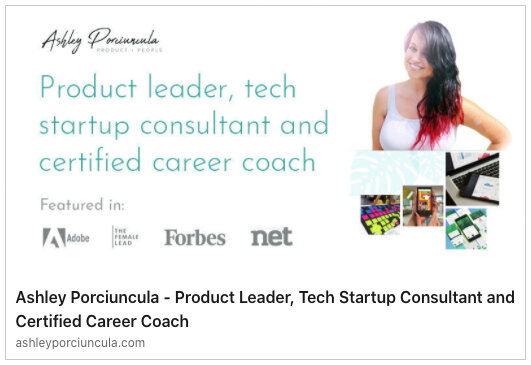
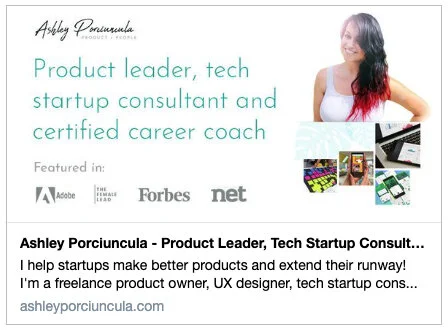
Want to see it in action? Here’s what my website looks like with tags, and without.
Facebook before:

LinkedIn before:

Twitter before:

Facebook after:
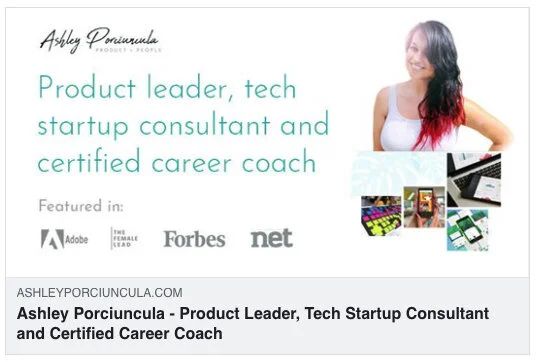
LinkedIn after:
Twitter after:
Your turn!
Giving it a go? Drop me a line on Twitter and let me know how it goes!
Looking for more tips? Check out 160+ Product and Startup Ideas.

Refining Your Roadmap with Audience Surveys
I have often said, “I have the easiest job in the world. All I have to do is ask the right questions, and other people will tell me what to do.” Audience surveys are the fastest, easiest path to validating ideas, getting user feedback, and getting told what to do!
I have the easiest job in the world. All I have to do is ask the right questions, and other people will tell me what to do.
Audience surveys are one of my favourite paths to validating ideas, getting user feedback, and getting told what to do. I say “audience surveys” because this method works at any stage, for any type of respondent. Early in the product process you’ll want to speak to anyone within your demographic, usually through social media. As you grow your user base, you can use the same method to speak to those real users directly.
My rule of thumb when creating surveys is, "Don't ask people what they think/want... let them show you!" Keeping this in mind, I like to do surveys in two phases.
Phase 1: Gather data with a Qualitative survey
This step is about gathering as much open-ended information from your audience as possible. It's about learning how they think, what their challenges are, and what they expect from you - even if they don't know it yet. The answers you get in this phase will help you make product decisions that solve a real problem.
During this phase, volume is the name of the game. For this reason, I recommend not making any questions required, because a half-completed survey is better than no completed survey.
Goals and Challenges
The sample questions below are written for a professional persona, but you can adapt them to your audience:
What is your current goal in your career?
What is your next step toward that goal?
When it comes to your career, what do you wish took up less time?
When it comes to your career, what do you wish cost less money?
When it comes to your career, what do you wish was easier?
When it comes to your career, what question do you wish you knew the answer to?
What is your biggest fear for your career?
Tell me about a big break you got in your career. What happened? How did it benefit you?
Speak Their Language
If you’re surveying a specific professional demographic, it can be helpful to learn about the language they use around their industry:
How would you define __________?
How would you describe __________?
Do you consider yourself a professional __________? Why or why not?
Existing Behaviours
You probably already know what solution you're hoping to sell them, so you can also ask questions about their existing relevant behaviours. These questions are based on the respondent's reality, not on their own assumptions or guesses about how they may react to your features.
What services do you currently use to do __________?
Has there ever been a time when you were frustrated by __________?
How many times did you __________ last month?
Have you recently done __________? What happened?
Avoid Fake Brainstorms
You want to avoid questions that create what I call "Fake Brainstorms". People who have burning ideas for your product will find a way to contact you. Asking for these ideas in a survey, however, tends to make people try to come up with something because they want to feel smart and helpful. Therefore, the responses you get often are not features they would actually use or pay for. Some examples of questions to avoid are:
What features do you think we should build?
What ideas do you have for the app?
A trick to getting around this is asking them to think about other people, as opposed to themselves. This can produce better quality ideas, but the responses still need to be taken with a grain of salt. One way to ask this is:
How do you think you could benefit from our app?
Who do you think could benefit from our app, and why?
Are there any tools or services that you wish existed to help with __________?
Note that the last question leaves it open to the user to simply say, “No” and move on, if they don’t have any burning answers to give.
Phase 2: Check your assumptions with a Quantitative survey
Once you've gathered and processed your qualitative data, and looked for patterns, you can follow up with quantitative questions based on your assumptions. This can help you determine where to prioritise something, how much room to give a feature in the UI, or if it's something your users might pay for.
Ask About Preferences
Give users one topic at a time to choose or rate. Some examples of how you might ask this are:
Which of these features would you rather have access to? __________ or __________?
Please rate your interest in __________ (1-5)
You can take these same concepts and ask them a different way, so that you’ve approached the topics from two angles. My favourite way to do this is by asking:
Please select all statements below that are true.
I am interested in __________.
I find __________ to be stressful.
I am confident in my __________ abilities.
etc…
Perceived Feature Value
If I’m looking to project purchase behaviours or product-market fit, I end these surveys with some additional open-ended questions:
Think about all the features from above that you were interested in. Which of these features excite you the most?
How much would you expect to pay for a service that provided those features?
How much did you spend on __________ in the last month / year?
How disappointed would you be if [your app] went away, and none of those features were built?
Asking About Pricing
I’ve been asked before, “Why are you asking about pricing as a text input question?” Asking this question through multiple-choice, a slider scale, or even limiting the input to a number, would require you to make some assumptions. You would be assuming what the low and high ends are, if users are expecting a monthly fee vs a one-time fee, etc. If you’re confident you know those answers, then that’s fine, but if not then it’s best to not force the user into any specific type of input, as you would be missing out on answers like "I wouldn’t pay anything because I already have these features" or "I wouldn't pay for it, but I have friends who would." etc.
Extra Tips
👉 You’ve already got their attention, so use that to your advantage! Don’t forget to end your surveys with a strong Call To Action (CTA). That could be leaving their email to opt into updates, linking them out to a Facebook group, etc. Either way, try to avoid leaving your respondents at a dead end.
👉 How many people do you need? Check out Survey Monkey’s Sample Size Calculator.
👉 How can you find people to take your survey? Check out my blog post, “8 Places to Find Survey Respondents”.
🎁 Read over 160 additional tips and tricks for your product journey on my Trello Board.
Now Go do it!
My challenge to you is to run a survey this week. There’s never a wrong time to learn more about your audience or to double-check your assumptions and plans. I’d love to hear how it goes - tweet me @ashleymarinep!

Hi, I’m Ashley. I’m a creator, entrepreneur, gamer, storyteller, and serial doer.